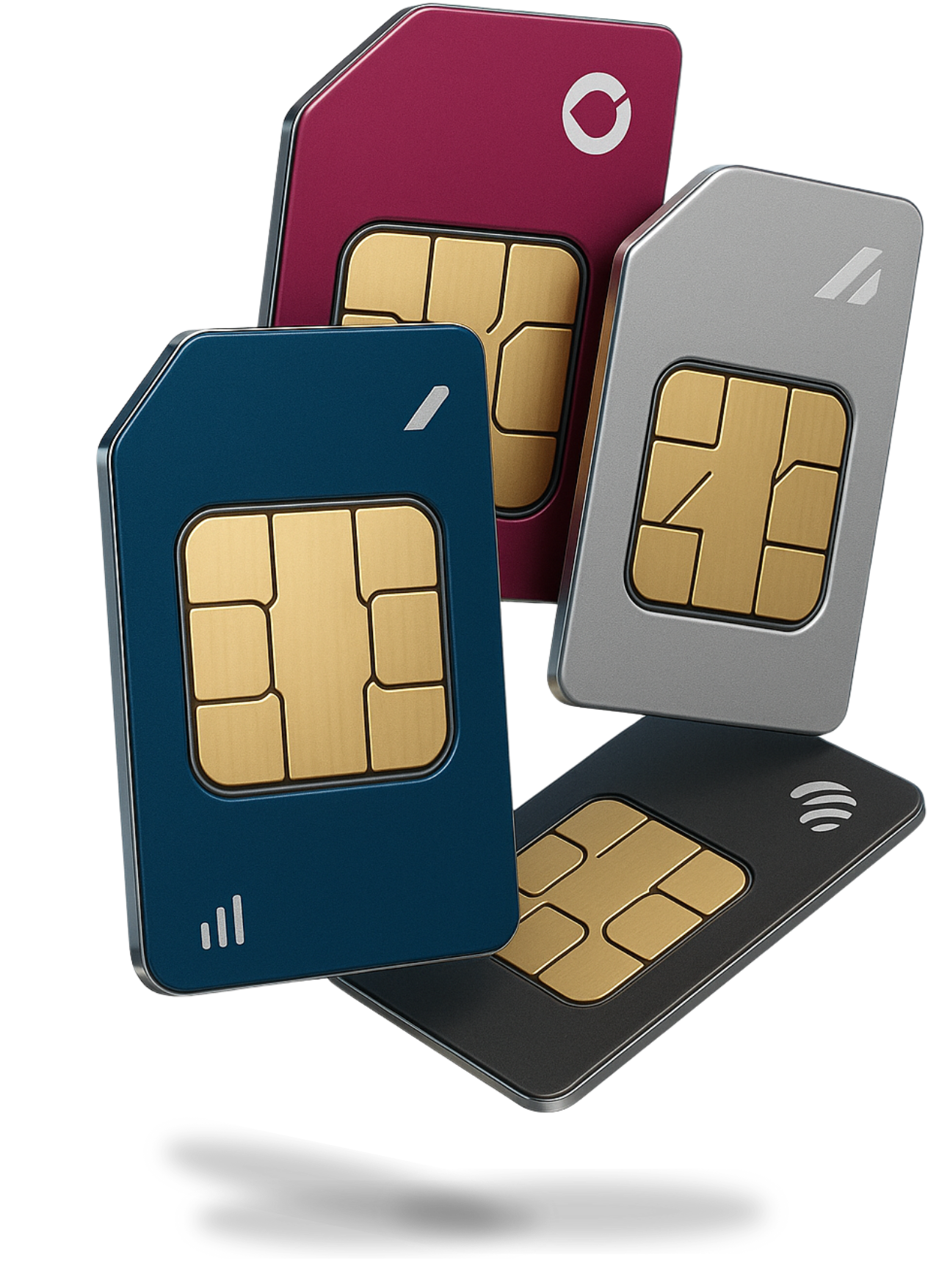

Most enterprise Wi-Fi networks already have the technical foundation for carrier-integrated connectivity. What they’re missing is a secure authentication path to the mobile operators.
LongFi Connect creates a carrier-supported experience inside your venue from moment of activtion. Supported smartphones authenticate automatically using SIM credentials, so visitors connect instantly without passwords, splash pages, or any kind of onboarding flow.
LongFi Connect integrates with two of the three largest mobile carrier ecosystems in the United States, including their MVNO subscribers. In practice, that covers roughly two-thirds of smartphones from day one. Your existing Wi-Fi infrastructure becomes a carrier-grade indoor connectivity layer immediately after activation.
Most visitors connect immediately after activation
The traditional way to improve indoor cellular performance involves distributed antenna systems, small cell radios, or construction-level carrier coordination. Those projects take months to plan and deploy, and they’re expensive before a single user benefits.
LongFi Connect takes a different approach. It activates carrier authentication directly inside your existing enterprise wireless environment. Supported smartphones connect automatically when they enter the venue, reconnect on repeat visits, and roam across access points without any user interaction. MVNO providers run on the same underlying carrier infrastructure as national operators, so their subscribers get the same compatibility.
Venues can extend reliable indoor connectivity to a large portion of guests immediately after deployment, instead of waiting on infrastructure upgrades that may take quarters to approve and build.
The U.S. subscriber base is concentrated across three national carriers
The U.S. wireless market is dominated by three nationwide operators that collectively serve nearly all mobile subscribers.
As of 2025:
- The largest carrier represents about 36% of subscribers
- Another represents roughly 33%
- The third represents approximately 27%
Together, these three account for the overwhelming majority of nationwide mobile subscriptions, and that’s before you count MVNO traffic running on their networks. [1]
Because LongFi Connect integrates with two of these three ecosystems, most venues can support a substantial share of smartphones right after activation.
Most smartphone traffic happens indoors
Indoor connectivity performance matters because mobile usage primarily happens inside buildings. The infrastructure was built to cover streets and highways, but that’s not where phones get used most.
Industry research shows:
- People spend close to 90% of their time indoors
- Up to 80% of mobile data traffic is generated indoors
- Indoor users frequently rely on outdoor macro towers not optimized for building penetration
The mismatch between where people actually use their phones and where cell coverage was designed to reach is the core reason indoor connectivity is so inconsistent. [2]
LongFi Connect shifts supported connections to nearby indoor access points instead of distant outdoor towers, which improves reliability without requiring any cellular hardware deployment.
LongFi Connect creates a carrier-supported experience, not guest Wi-Fi
Traditional guest Wi-Fi requires manual onboarding steps that interrupt mobility and reduce how many people actually connect. Carrier-supported connectivity removes those steps entirely. Smartphones authenticate automatically using trusted subscriber credentials.
With LongFi Connect:
- Supported devices authenticate automatically using SIM identity
- Connections begin immediately upon entry
- Roaming continues across large indoor environments
- Messaging, calling, and mobile data sessions remain stable indoors
Users get continuous connectivity instead of bouncing between networks or hunting for a login page.
LongFi Connect enables carrier integration without infrastructure changes
Historically, improving indoor carrier coverage meant installing dedicated radio systems and coordinating directly with operators. LongFi Connect removes those barriers by enabling carrier-integrated authentication through the enterprise Wi-Fi environments already deployed across most commercial properties.
LongFi Connect activates compatibility inside your existing infrastructure. Venues can support a majority of smartphone users from day one without adding equipment, increasing operational complexity, or changing firewall strategy.
Indoor mobile traffic keeps growing across public environments, and carrier-supported connectivity is becoming a baseline expectation, not a specialized upgrade. LongFi Connect makes that transition possible immediately, using infrastructure you already operate.
References
[1] Statista. Wireless network operator subscriber share in the United States. https://www.statista.com/statistics/199359/market-share-of-wireless-carriers-in-the-us-by-subscriptions/
[2] Ericsson. Optimizing indoor connectivity. https://www.ericsson.com/en/reports-and-papers/mobility-report/articles/mobile-broadband-indoor-deployment