
Activating LongFi Connect doesn’t require new antennas, construction, or hardware replacement in most environments.
Eligibility comes down to whether your venue already has the foundational infrastructure needed to support secure carrier-grade indoor connectivity. LongFi Connect lets mobile carriers route subscriber traffic through your existing enterprise Wi-Fi network, improving indoor service while generating a new recurring revenue stream for your location. Cellular offload through trusted Wi-Fi environments is already how carriers handle this problem efficiently. [3]
Most venues that host guests regularly already meet these requirements.
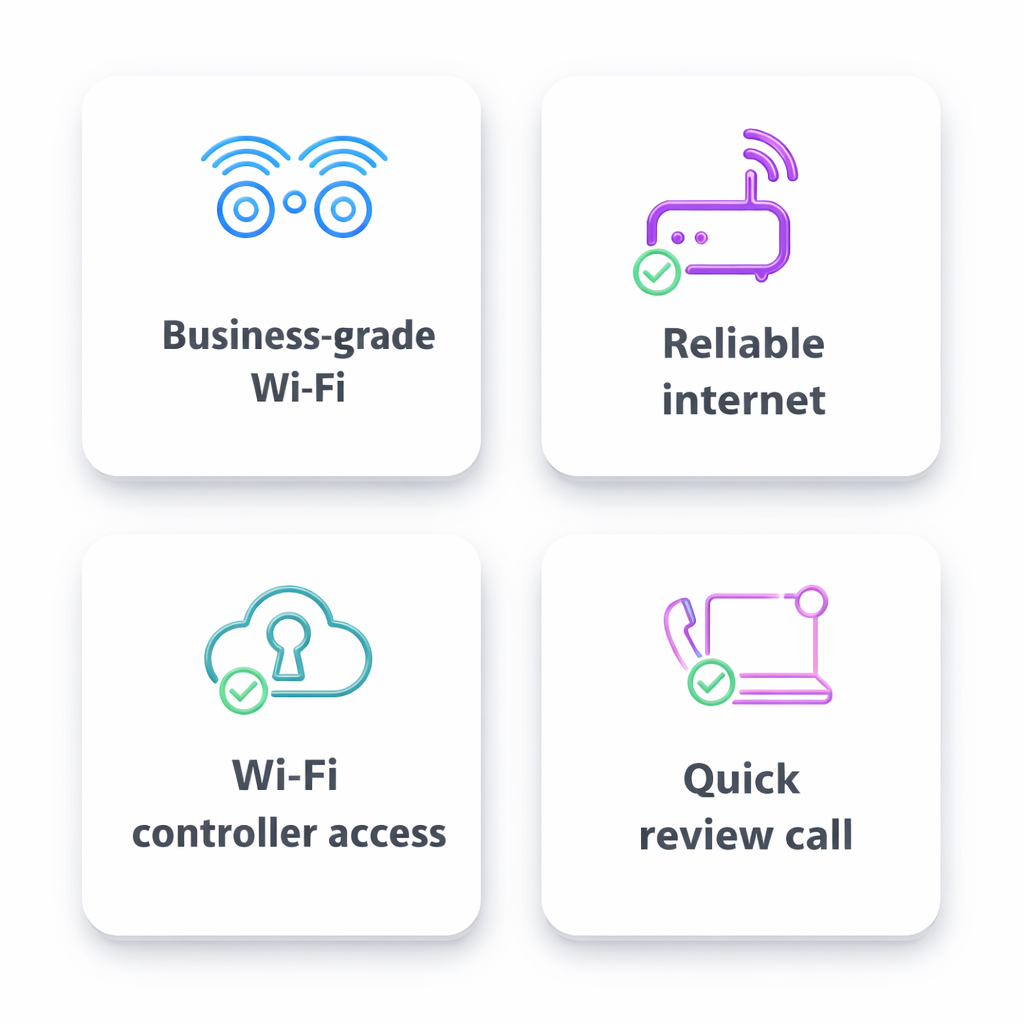
Here are the four conditions that determine whether your location can activate LongFi Connect immediately.
Business-Grade Wi-Fi Infrastructure
LongFi Connect runs on enterprise wireless networks built for secure, managed connectivity.
Venues using business-grade platforms from vendors such as:
- Cisco Meraki
- Ubiquiti UniFi
- Aruba Networks
- Ruckus Wireless
- Juniper Mist
- Cambium Networks
are typically well positioned for activation.
These systems support the authentication and segmentation standards required for carrier traffic integration. Carrier-grade Wi-Fi frameworks rely on identity-based access methods like Passpoint and SIM authentication to move subscribers automatically onto trusted networks. [3]
In general, consumer-grade equipment generally doesn’t have the control architecture carriers require.
Reliable Internet Capacity
A stable broadband connection means indoor carrier traffic can move alongside normal business operations without getting in the way.
LongFi Connect uses existing bandwidth efficiently and doesn’t touch guest Wi-Fi or internal systems. It puts excess wireless capacity to work for mobile subscribers who are already inside your building — which is where most of their data usage happens anyway. Studies show up to 80% of mobile traffic originates indoors. [1]
Your network supports both operational traffic and carrier activity at the same time. The two don’t compete.
Access to Your Wi-Fi Controller
Activation requires a configuration change at the wireless controller level.
Your IT provider, managed service partner, or internal administrator reviews and approves a carrier-aligned configuration update. Once that’s done, supported smartphones authenticate automatically using SIM credentials and connect to the indoor coverage layer LongFi Connect provides.
Enterprise wireless systems already support identity-based segmentation and encrypted authentication, so this typically happens remotely without interrupting anything. [2] No physical installation in most environments.
A Short Technical Review Call
Before activation, LongFi Solutions schedules a brief call with your team or IT contact.
This covers:
- Wi-Fi platform compatibility
- controller access availability
- bandwidth readiness
- deployment scope
It’s not a long process. The point is to confirm your environment supports carrier-approved configuration standards before moving forward.
Once confirmed, most deployments proceed without any operational disruption.
Why Most Guest-Serving Venues Are Already Eligible
Next, If your location regularly hosts visitors, there’s a good chance you’re already ready.
Restaurants, hotels, clinics, gyms, retail environments, and entertainment venues already support the kinds of indoor connectivity activity carriers need to deliver. And as indoor signal penetration gets harder with higher-frequency 5G spectrum, carriers are leaning more heavily on trusted enterprise Wi-Fi to fill the gaps. [2]
LongFi Connect is how venues plug into that directly — using infrastructure they already run.
What Happens After Your Venue Qualifies
Once eligibility is confirmed:
- supported smartphones connect automatically
- carrier traffic moves securely across your network
- indoor coverage improves for guests
- carriers recognize the coverage contribution
- LongFi shares resulting revenue with your venue
You’re not buying new infrastructure. You’re letting carriers deliver the indoor service their subscribers already expect — and getting paid for it.
References
[1] Ericsson. Optimizing indoor connectivity – Ericsson Mobility Report https://www.ericsson.com/en/reports-and-papers/mobility-report/articles/mobile-broadband-indoor-deployment
[2] Ericsson. Planning in-building coverage for 5G: from rules of thumb to statistics and AI https://www.ericsson.com/en/reports-and-papers/mobility-report/articles/indoor-outdoor
[3] SIIT. Cellular Offload Economics: Why Carriers Pay for Passpoint-Ready Wi-Fi https://siit.co/guestposts/cellular-offload-economics-why-carriers-pay-for-passpoint-ready-wi-fi/